The Village Waves Hello
I love Sofia in the same way we often greedily cling to our partners, still in love with them even though they keep sleeping with other people, but I guess that’s more of an obsession than love. Been there. Done that. That’s a topic for another book entirely.
I’ve never been a person of much means and have spent my entire life struggling, and surviving, often due to my lame indifference. I undertook this project while shopping for deals on rice and beans and taking whatever odd jobs I could find. Much of the time, I relied on the kindness of friends and family simply to get by and pay everyone involved whatever little I had. Was it the most brilliant life choice on my part? Nope.
In retrospect, maybe I should’ve waited until I had financial stability. If that were the case, however, the project would’ve never happened. An opportunity presented itself, and I was compelled to take it. I made an impulsive decision to go and live in some random village for a few weeks, to stay with a family there, and to try and understand what that kind of life is like.
I was hoping to catch a glimpse of the secrets that were actually never secrets at all, if any of us would just take a break from daydreaming about our social media posts reaching a hundred likes. If we’d only open our eyes and ears to the souls living beyond our cities and leave behind the 11th-grade lifestyles we’ve somehow sunk into.
After spending time in Negovanovtsi in northern Bulgaria, a village resting on the churning Danube, I knew I had to explore more. I had to talk to more of this lost generation while they were still around to talk to. I understood the importance of someone sitting down and just chatting with you, listening to you, drinking a bit of backyard hooch, and letting you know you are appreciated. The wisdom and awareness they have to impart are immense. It was a debilitating shame to think that these people were being forgotten, looked over, intimidated, laughed at. Occasionally, they’re made into a sort of “status currency” for some overzealous, highly opinionated urban outsiders to use as a means to feel more alternative or cutting edge — the list can go on until my tattoos fade.
I felt connected to the idea of the village and the people inhabiting it. I felt in some way that they were the root of all that’s good. Perhaps not in our lifetime, but the cities will fall and decay as all things do when they only devour and never create or produce.
Villages will once again be the lifeline of humanity.
•••
There’s no other point in this story that I could start with besides my first Bulgarian village experience.
Over the last decade or so, I have been shuffling around Bulgaria but only briefly passing through villages, never stopping to stay, never spending time with the people, drinking with them, conversing with them, eating with them, never laughing and falling victim to their memories.
In these forsaken villages, I discovered that sadness and happiness are often felt simultaneously and rely on each other to exist.
I remember my first village and getting off the bus that carried me there. The place where I figured out that the best way to get to know someone is by cooking with them and sitting down to a meal together. The place where I decided that this was exactly what I was going to do here in Bulgaria—the place that I had made my home but still knew so little about outside of the capital and its never-ending repairs of things that have already, supposedly, been repaired.
Greetings from Baba Ana of Negovanovtsi
I found myself in a village called Negovanovtsi. It’s just a bit off the Danube, north of the town of Vidin, and it’s been slightly luckier than some other even more remote villages.
I had no real voice in the choosing of the village nor the people I ended up staying with — it was all chosen and organized voluntarily for me. The organization consisted of several enthusiastic (sometimes exhaustingly so) and warm-hearted urbanites actively trying very hard to understand the village lifestyle. I was in complete opposition, in terms of character, to the organization and the people populating it, as well as the university students participating in the actual residencies. Being in my late thirties at the time, I was in possession of zero ambitions for an academic career, nor did I have deep enough pockets to pretend to be of any importance—actually, I lacked pockets of any size at all.
It wasn’t long before I realized I needed a photographer who would not only take pictures but also save me from misunderstandings if I got lost on the road or in translation. This was often the case.
The first lucky guy happened to be a close photographer friend of mine, known as “the Chinaman” in Bulgarian despite having no connection with China at all (personally, I could never bring myself to call him that without feeling absolutely ridiculous. I just used his real name — Ivo). To this day, I still have no idea why they call him that, and neither does he. In Bulgaria, almost everyone has a nickname whose origin they can rarely explain. I found this annoying, but then I realized that I was just jealous because I didn’t have one… yet.
Later we were joined by a second photographer named Stefan from Yambol. It was always a nightmare planning something between myself, the photographers, our families, the grandmothers we visited, the weather, our jobs, and whatever else conspired that day to stop us. Without these photos, I would’ve never been able to finish this project, as half of the material and content that goes in through my eyes, in past my ears, or out of my mouth completely fades six seconds after it happens.
The only requirement I insisted on was that, wherever I went, the people there loved to cook. This narrowed it down to practically every person in every village, ever.
In any case, I couldn’t have asked for a better setting or a more dynamic and beautiful set of hosts. I grabbed the few things I had brought along with me on that bus ride and made the dusty three-minute walk from the village square to the heavy, slightly open front gates of Baba Ana and Dyado Emil.
•••
Negovanovtsi. Like all places outside the cities these days, it’s dissipating, falling into disrepair. So are the local people. If these souls don’t make their way to the cities for a shot at those blurry urban opportunities, they often fall into depression, alcoholism, etc. Simplicity and honesty don’t often win against the city’s allure and dangling promises of progress.
This area is unique in its heritage and history. Being one of only a few remaining enclaves for the Vlach people, whose ancestors were ancient Romans and Dacians, there are hordes of cultural treasures and stories to reap. Unfortunately, their numbers have withered to a staggering low—now sitting at less than 4,000.
As with any small community, everyone knew what everyone had for breakfast and whether or not they’d found a hair in their coffee. Village politics occupied the minds of those sitting at most tables: common enemies like the village drunk, the stray dogs tearing up their gardens, and the shortage of paid work.
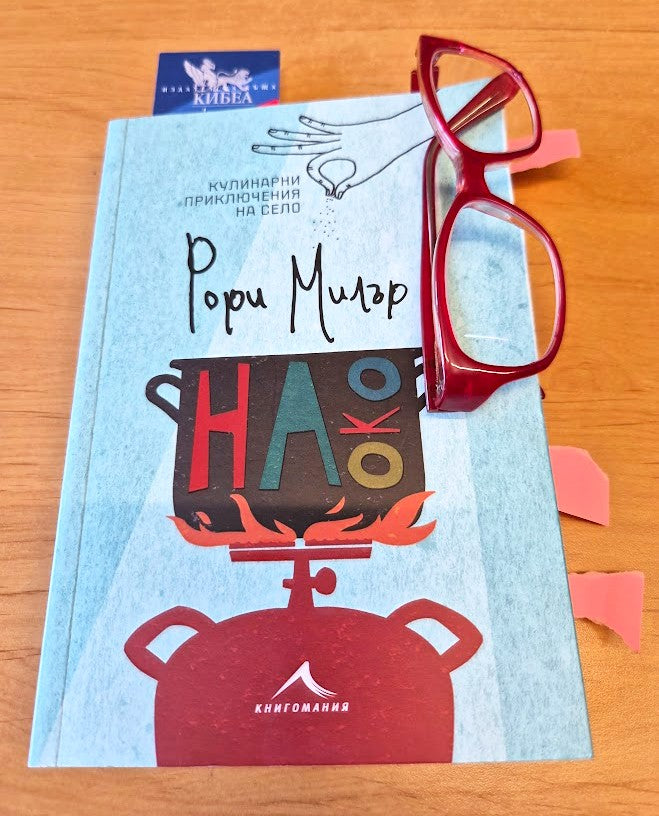
Each day was taken as it was. In Bulgarian, they say “Na Oko.” Literally translated, it means “By Eye”; figuratively, it refers to not measuring but rather feeling something out and making whatever it is your own.
•••
Eventually, I came to the large, hodgepodge home of my gracious hosts, the enormously kind Baba [Granny] Ana and Dyado [Grandpa] Emil—or, as the locals call him, “Dyado Bulgaria.” They allowed me a glimpse into their lives for a short time and revealed to me a bit about themselves, their lives together, their family, and, of course, their village.
Their house was mostly obscured by lush ash trees in summer bloom and a vine-covered veranda providing shade for a quirky dining table beneath that often inspired emotional conversation. I spotted a few cats of different ages creeping out from corners and dark holes to greet me, hoping I had a chicken bone for them.
Baba Ana stood there with her arm outstretched over her head and Dyado behind her in an awkward knock-off designer t-shirt, his arms hanging down after setting his drink on the table. She waved me into their yard, which I’d soon learn was more like a living room during the summer. In the winter, those lively gatherings would move into the kitchen, where the air becomes permeated with a bouquet of cigarette smoke and the aroma of cooking.
I gently turned the loose door handle on the gate and walked in for introductions. They both came up to me at once, pressing their hands into mine, their faces emblazoned with genuine smiles and infectious curiosity. I instantly felt at home. Before I could respond with any word other than thank you, I had a glass of rakiya [brandy] and another one with cold neon-colored soda thrust into my palms.
Baba Ana is spry and up before dawn each day. She radiates confidence and is as necessary to the home’s stability as one of its concrete pillars. She’s never without an apron, its sagging front pouch a haven for knick-knacks and wise hands.
Her face glows with experience and humility. The mere sight of her bustling in and out of the house, over the garden, to the shop, and back instantly disarms you and makes you feel at ease. She’s the epitome of a good grandmother, and her deep sense of duty accompanied by her love of the human condition struck me every time she greeted me. I always felt cared for while around her, although I’d only known her for a short time.
Baba Ana was born in the small village of Gomotartsi in the Vidin region. She was born to village laborers and had an older sister. When she was still young, she started working at a bakery in Negovanovtsi while simultaneously holding down a second job as a cook for the local grade school. Cooking has always been her passion, and she nurtures it whenever she’s not preoccupied in her garden, chasing off stray dogs, tending to vegetables, battling droughts or other, more vocal nuisances like a hungry husband or barefoot grandchildren.
Dyado Bulgaria Drinks No Water
Her husband Emil is famous in the village and one of the most unforgettable characters I’ve had the opportunity to encounter. They call him “Dyado Bulgaria” because of a hazy soccer match years ago — I had to ask him about it several times before being able to figure out what happened, more or less.
The story goes that he and his local soccer team went to play a match in a nearby village across the border in Romania. The night before, Dyado Bulgaria and two of his friends made the logical decision to drink steadily until 5 AM — little did they care that the match started at 10 AM.
He looked at me with squinting eyes and recounted: “At the time, Romania was extremely poor, and they didn’t have any alcohol — no beer, no wine, not even any moonshine (the brandy sort)! So, we brought ten liters of wine with us.”
When he and his soccer entourage were feeling pretty horrible the next morning, they drank whatever was left of those ten liters to get themselves back into shape. It had started to rain heavily, but that didn’t bother the drunken trio of footballers.
Fifteen minutes into the first half, he managed to slap in a very wet soccer ball with his head and score the match’s only goal. The 200 or so Bulgarian fans started chanting “Bulgaria! Bulgaria!” as they all ran from the irate and aggressive Romanian fans, who numbered more than 2,000—and that’s where the story stops. All he knows is that they snuck onto an unmarked bus, passed out on the back seats, and woke up later that afternoon back in the safety of his own village. He left that game as a young man with the nickname “Bulgaria.”
The story would always remain either unfinished or interrupted by a glass of wine or, if it was too early for wine, rakiya.
He’s the kindest, most self-sacrificing man. His life’s been filled with disappointment and hardship, although moments of sheer joy perforate his memories, evaporating the bitterness or sadness that many others might succumb to. His smile and small eyes beam from his profoundly wrinkled face, steering any conversation to a merrier tone regardless of how painful the subject is.
Some time ago, he contracted a severe case of arthritis in one of his hands. It was so bad that the hand was left permanently immobilized and stuck in a semi-fist. For most people, this would’ve meant defeat, but Dyado Bulgaria isn’t most people. His energetic and productive pace of life has never faltered.
Dyado’s tall, thin figure can be seen getting up every morning with his wife to take his old Soviet tractor to the fields to haul out sunflower seeds or crates of freshly picked grapes. One sunny afternoon, after having drunk just enough wine, he decided that I should come and take that same tractor out for a ride around the village, which we did.
It was what you would expect from driving a 40-year-old tractor—slow and mechanical. A belly full of cellar wine made the trip much more pleasant, though. We stopped at both small shops in the village to grab a beer or rakiya. Each time, he met some old friends of his sitting outside on a bench under the shade, animated by alcohol and dissatisfaction with the state of things.
It was only a trip of a quarter mile, but it took three hours to get back. And then it was absolutely time for a nap.
On a usual workday, he would return in the early evening with little alcoholic presents for himself and another something sweet for his wife. On more than one occasion, he proudly told me that he hadn’t drunk water in almost fifteen years—only wine. Water’s for cleaning dishes and for animals, he says, not for drinking.
It was clear they both loved each other very much. For them, it all began one festive New Year’s Eve when Ana met Emil, the love of her life. They began seeing each other after that, and, three months later they asked themselves “Why don’t we get married and start a family?” They did—immediately, and in that order.
•••
We spent mornings, afternoons, and evenings mostly sipping the not-so-delightful cocktail mechka, which is made in equal parts from low-quality homemade red wine and sparkling lemonade that’s almost a radioactive shade of yellow. We rarely stopped joking and discussing village politics, as well as certain notorious drunks who would often roam about stealing rabbits and breaking fences; we spoke about farming, our families, and life with all its shadows and sunbeams.
Between the tractor rides for sunflower seeds, afternoon naps, and chipped mugs of mechka, I was able to discover a few local recipes. This included a somewhat drawn-out and exhausting execution of a hen for what would eventually go on to become chicken broth for salamura—my first time eating something made with an animal that was very much alive and doing animal things just an hour before. I felt like I had eaten an entire family of chickens, two generations’ worth consumed in half an hour.
I could hear the elderly residents in their gardens, through gates and across fences, discussing life in their native Vlachian tongue. A fascinating Eastern Romance language akin to modern Romanian, it’s on its slow path to the grave. In Bulgaria, it now survives only in spoken form and mostly among grandparents in a few remote villages.
•••
After three weeks of me and my naive, persistent questioning, I’m sure they were relieved to see me wave goodbye. They stuffed my hands full of plastic bags heavy with homemade wine, fruits, jars of random pickled things, and, of course, an empty ice cream container filled with banitsa and kyufteta for the road.
For my wandering American soul, I had found roots. They may not have been mine, but all the same, they were roots. I can safely say that this was my first experience in any village, no less a Bulgarian one. It was my first chance to actually live there and feel the village heartbeat.
It inspired me. After many years of running around this country, I have to say that everything great and real about Bulgaria exists in the villages. You won’t find those things in any city, and I’m now convinced that it must be the same everywhere in the world.
Watching them wave to me, smiling, I felt good. I knew it in my bones that, if only briefly, we had given each other hope, and I often think of returning to those mornings of mekitsi, coffee, and a little rakiya.
[…]
A quick recipe for such a wedding rooster given to me by a Bulgarian baba down the road
A well-cleaned rooster is simmered over medium heat for two or
three hours. The legs should be tied so that they don’t fall apart during cooking. The water needs to be salted and have some onions, carrots, and a handful of chopped tomatoes in it.
“After boiling, remove the rooster from the pot and let it cool in the cold air. Then it should be decorated. For its glamorous transformation, you’ll need:
- an egg or potato that can be stuck onto the neck and used as a head—or the actual head of the rooster can even be reused.
- a string of small red peppers for a necklace or sash. You can also use a string of beans, popcorn, or raw corn for a fashionable accessory.
A long time ago, people started to put things on this hip rooster such as trousers, a shirt, or earrings. Of course, they might even fix a Bulgarian flag to its back with a clothespin or nail of some sort. Various vegetables, dried peppers, and fruits can also be added to the metamorphosis.
Lastly, for the rooster to sit upright, it’s stuck on a bottle (you can use your imagination for that one). For even greater stability, it’s surrounded by loaves of bread with flowers and geraniums.
I was married once, many years ago, and this tradition would've made that painful experience so much more amusing and enjoyable. Maybe next time? Probably better not.
To the book “Na Oko: Adventures in Village Cooking from Bulgaria’s Forgotten Corners”